NJCAA: Using JUCO as a second chance for NCAA track and field scholarship
NJCAA Division I and II junior colleges can give up to 20 track and field scholarships per team. How JUCO aid works in 2026-27, what it covers, and how athletes use it as a route to an NCAA scholarship.
Updated October 2026 with the NJCAA’s 2026-27 scholarship limits and signing date.
Searching for the right university, going through the recruitment process, and managing the pressures of high school can be overwhelming, to say the least.
Streamline Athletes helps high school track and field athletes make confident decisions about where to study and compete at the collegiate level.
Streamline Athletes includes NJCAA junior colleges on our platform, giving soon-to-be high school graduates even more schools to choose from when going through their own recruitment journey. You can browse NJCAA Division I programs and start contacting NJCAA coaches to discover your own scholarship opportunities!
For context, NJCAA stands for the National Junior College Athletic Association and is also referred to as JUCO. The NJCAA is the governing association in the United States for:
- Community colleges
- State colleges
- Junior colleges
NJCAA colleges are spread across three divisions. Division I and II colleges can give athletic scholarships for track and field and cross country. Division III colleges can’t give athletic aid of any kind.
If you have watched Last Chance U on Netflix, you know exactly what JUCOs are!
The JUCO route is one part of getting recruited. To see how it fits with everything else coaches weigh, from your PRs to your grades to where you want to live, start with our complete guide to getting recruited for college track and field.
Why choose the NJCAA?
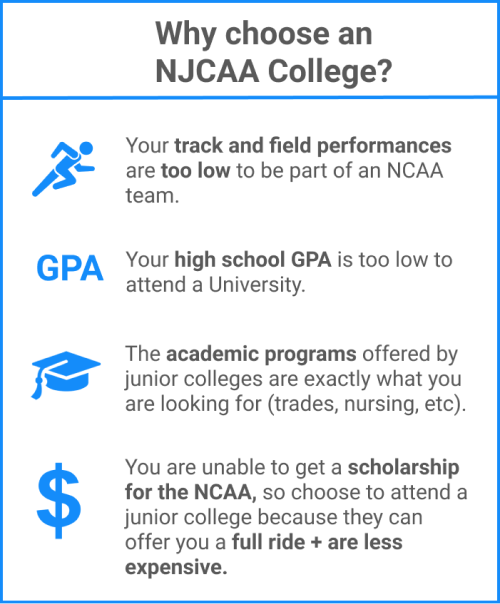
JUCOs are a very good option for student-athletes who do not have all the requirements to attend an NCAA institution yet. Student-athletes have the ability to move at their own pace when figuring out what is best for them both academically and athletically. It is very common for athletes to use NJCAA programs as a stepping stone in order to access better NCAA opportunities.
These types of colleges are offered all over the United States, but for comparison, the Canadian equivalent of the NJCAA is the CCAA (Canadian Collegiate Athletic Association), which includes schools such as Concordia University of Edmonton and Lethbridge College
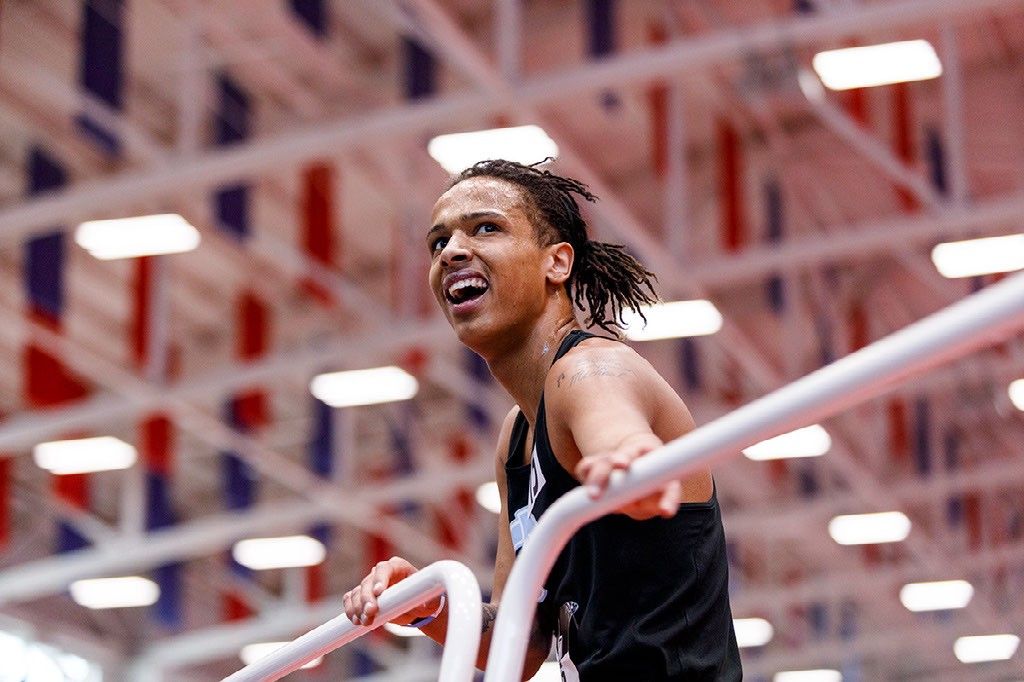
NCAA track and field programs expect competitive performances from their incoming athletes so it will naturally be harder to get scholarships with these institutions. The NJCAA can give an athlete the time to get better at their event before doing the big leap into the NCAA.
Many athletes in the NJCAA are strong athletically, but unfortunately have more difficulty with their academics. The NJCAA can offer them the opportunity to get a fresh start academically and give student-athletes the chance to increase their GPA. Many NCAA recruiters look at NJCAA schools for talent.
Key differences between NCAA institutions and NJCAA programs
Scholarships
Most JUCOs that are part of the NJCAA Division I have good funding and the ability to pay tuition fees and housing for athletes through an athletic scholarship offer. For 2026-27, NJCAA Division I and Division II colleges can each give up to 20 track and field scholarships per team, plus 10 for cross country and half marathon combined, according to the NJCAA 2026-27 sports procedures chart. A Division I award can cover tuition and course fees, room and board, books, up to $250 in required supplies, and one round trip home a year. A Division II award covers tuition, course fees, books, and up to $250 in supplies, but not room and board. Division III colleges give no athletic aid. To commit, you sign an NJCAA Letter of Intent, which covers one academic year. The first signing date for track and field and cross country is November 1.
Academics
NCAA Colleges offer bachelor’s degrees and some offer master’s degrees. NJCAA Junior Colleges and Community Colleges offer trades degrees, technical formations, and other professional certificates like nursing and accountancy. The highest level of certification available at JUCOs are associate degrees.
Tuition
The tuition cost per year for NCAA colleges is more expensive than NJCAA programs. A four-year public university charges an out-of-state student an average of $31,880 USD a year in tuition and fees, and a private one charges $45,000 USD (according to College Board, 2025-26).
Junior colleges cost a fraction of that, which is one reason athletes use JUCO to save money before they transfer.
Academic Timeline
NJCAA colleges are 2-year institutions. When the two years are up, students will most likely have an associate’s degree or a technical degree which gives students the ability to enter the workforce after two years of education. While for some people this is enough, many student-athletes choose to then transfer to a 4-year school in the NCAA/NAIA.
*Note that some NCAA universities are not as academically demanding as others, and it is definitely feasible for student-athletes to complete both their bachelors and masters in 5 years.*
Start Your Recruitment Journey Today!
Streamline Athletes is happy to help you with your own journey towards collegiate athletics. Our recruiting platform is built for track and field and cross country, and it covers NJCAA, NCAA, NAIA, and U SPORTS programs.